
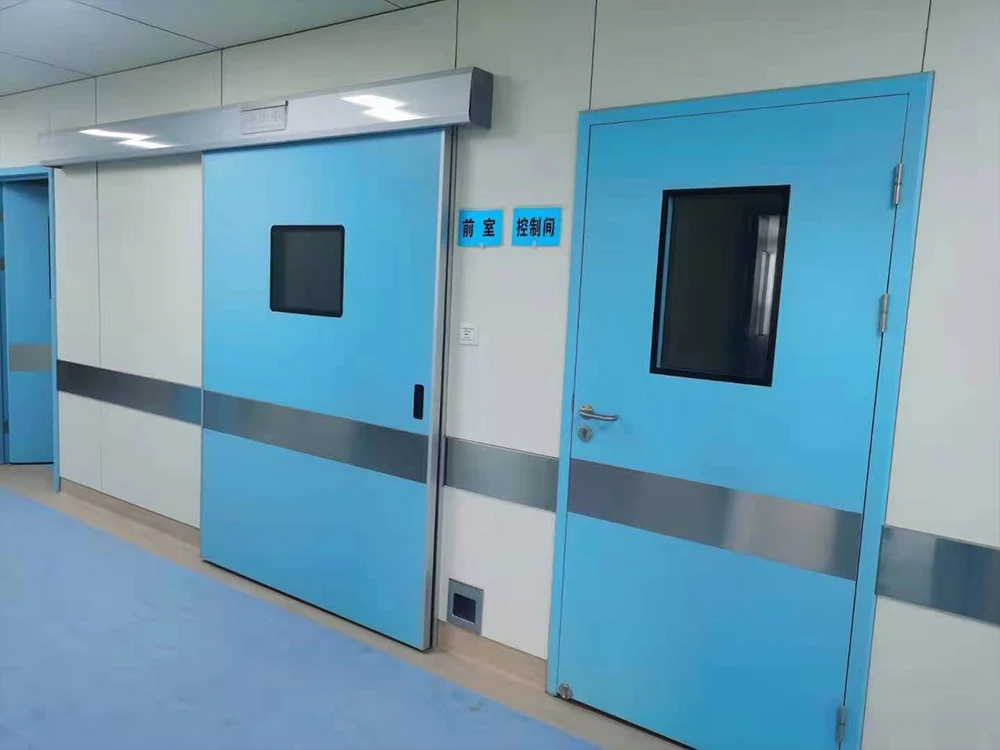
The airflow of a steel cleanroom door directly affects its filtration and performance. In industrial environments, air pollutants often contain dust and harmful gases. If the airflow of a steel cleanroom door is insufficient, it cannot effectively filter these pollutants, resulting in substandard workplace air quality and posing a threat to worker health.
Therefore, the airflow needs to be determined based on the specific working environment and requirements. Generally, the higher the airflow requirement in an industrial environment, the more crucial it is to ensure that airborne pollutants are quickly filtered out to maintain fresh air. Simultaneously, the workplace area and pedestrian traffic must be considered to avoid discomfort caused by excessive or insufficient airflow.
Steel Cleanroom Doors
Airflow adjustment is typically achieved through fans. Fans can regulate the airflow to ensure the cleanroom door's ventilation capacity under different operating conditions. When selecting cleanroom steel doors, it's crucial to consider the fan's power and noise level to ensure stability and comfort during operation.
Furthermore, the airflow of a cleanroom steel door is also related to its structure. Generally, cleanroom steel doors employ a multi-layered structure, including filter layers and air isolation layers, to ensure effective air filtration and isolation. A well-designed door structure enhances airflow efficiency and ensures proper operation.
In conclusion, the air quality of cleanroom steel doors is critical for maintaining workplace air quality. By appropriately adjusting the airflow and selecting a suitable door structure, the filtration and performance of steel cleanroom doors can be guaranteed, protecting the health and safety of employees.
NAVIGATION
Send Us A Message


Please give us a message